Many people feel a sharp pain when they bite down or worry about a filling that keeps breaking. They want a fix that lasts and keeps the tooth as natural as possible. A cracked or decayed tooth can make chewing a chore and bring on stress.
One fact helps calm fears: inlays and onlays are custom restorations that save more of the tooth than a crown. This piece will explain what they are, when a dentist picks them, and what to expect during the repair.
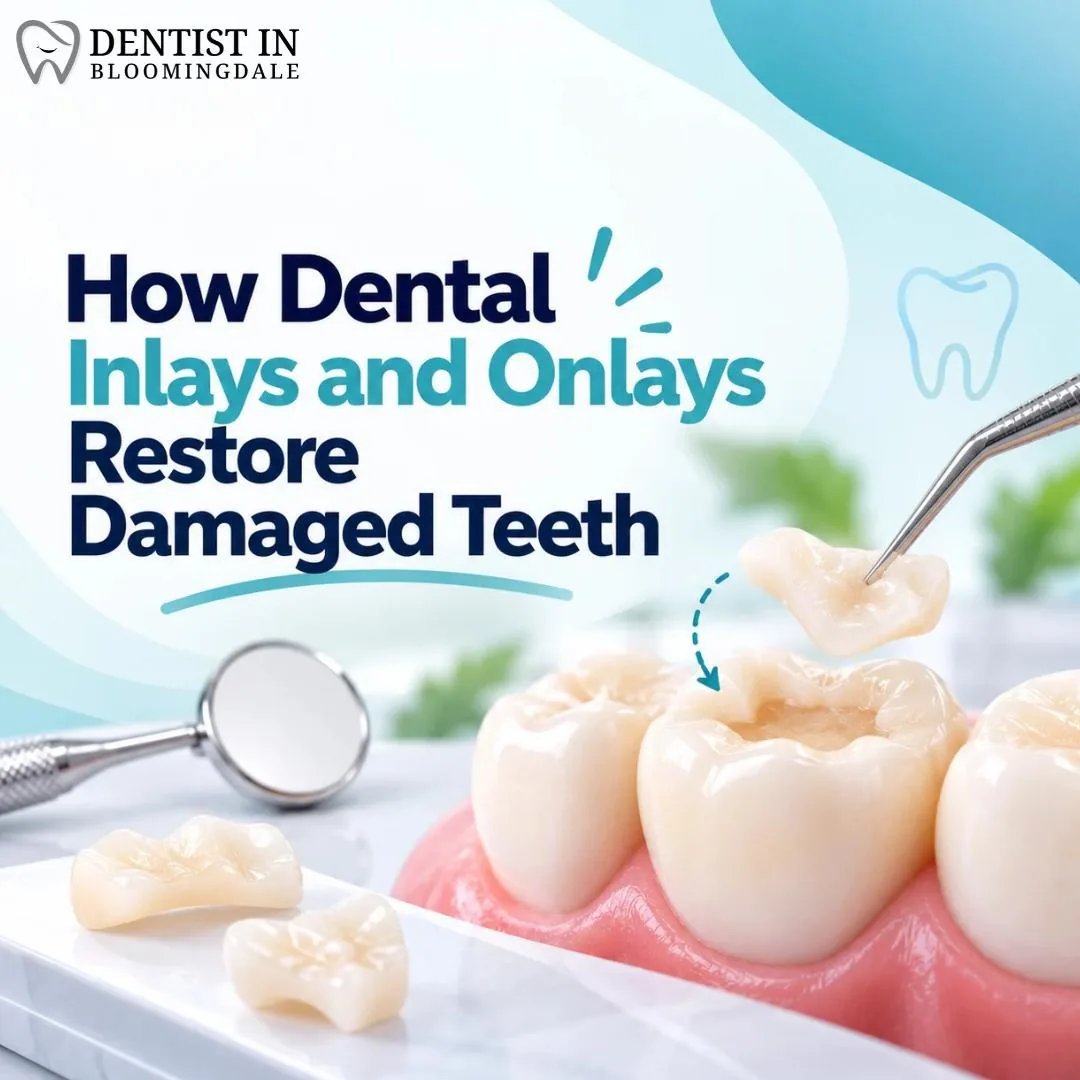
Dental inlays and onlays are special pieces dentists use to fix teeth with moderate damage. They fit into or onto your tooth like puzzle pieces, helping bring back its shape and strength.
Inlays and onlays are custommade restorations that repair decayed or fractured teeth. A dentist places an inlay inside the cusp tips, and an onlay covers one or more cusps. They use dental composite, porcelain, or gold.
They fit like a puzzle piece and replace lost tooth material without removing healthy tissue.
These restorations restore chewing function and strengthen tooth structure. They preserve more natural teeth than dental crowns. They protect against further decay by sealing margins tighter than many fillings.
Patients get longer lasting repair than simple composite filling. Think of them as a coat for a tired tooth, and a smart step in tooth repair.
Inlays and onlays come into play when teeth suffer from moderate damage. They provide an excellent solution for decayed or fractured teeth, especially when crowns seem unnecessary.
Moderate tooth damage often occurs from decay or minor fractures. This type of damage can affect the tooth's structure and function. Inlays and onlays work wonders in these cases. They fill the gaps left by decay or breakage effectively, restoring a healthy chewing function.
Patients may prefer inlays and onlays instead of crowns due to their conservative nature. These options require less removal of healthy tooth structure. Custom-made for each patient’s teeth, they provide comfort and strength.
Restorative dental procedures like this pave the way for improved oral health without sacrificing too much natural tooth material.
Here are practical alternatives to crowns and fillings.
| Option | Best For | Materials | Pros | Cons | Typical Lifespan |
|---|---|---|---|---|---|
| Inlays and Onlays | Teeth with moderate damage that still have strong walls | Porcelain, gold, composite | Precise fit, preserves tooth, good chewing strength | Requires lab work and two visits | 10 to 30 years |
| Direct Composite Restorations | Small to medium cavities; front and back teeth | Tooth-colored resin | Quick, single visit, low cost | Less durable than porcelain, may stain | 5 to 7 years |
| Partial Coverage Onlays | Broken cusps or large restorations that avoid full crowns | Ceramic, gold | Conserves enamel, strong bite support | Higher upfront cost, technical placement | 10 to 25 years |
| Veneers for Front Teeth | Cosmetic damage and chips on anterior teeth | Porcelain, composite | High aesthetic value, stain resistant with porcelain | Not for large back tooth fractures | 10 to 15 years |
| Glass Ionomer | Areas near the gum line and pediatric cases | Glass ionomer cement | Releases fluoride, bonds to dentin | Lower wear resistance, shorter life span | 3 to 7 years |
| Dental Bonding | Minor chips and small gaps | Composite resin | Fast and affordable, preserves tooth | Prone to staining, may chip | 4 to 8 years |
| Endocrown | Root canal treated molars with lost structure | Ceramic | Strong internal retention, avoids post placement | Requires precise preparation | 8 to 15 years |
Inlays and onlays fit snugly onto damaged teeth. They bring back strength and shape while blending in with natural tooth color.
Dental inlays and onlays fit the tooth perfectly. Their custom shape matches the damaged area exactly. This precise fit helps restore normal chewing function. A good fitting repair allows for stronger biting power, making it easier to enjoy favorite foods.
These restorations also mimic natural tooth structure well. Dental composite materials blend seamlessly with existing teeth. Patients can smile confidently without worrying about how their dental work looks.
Inlays and onlays provide effective solutions for decayed or fractured teeth while helping maintain overall oral health.
Continuing from the topic of precise fit and function, dental inlays and onlays serve an essential role in strengthening tooth structure. They bond tightly to the existing tooth material. This secure fit prevents further damage and enhances chewing ability.
These restorations reinforce fragile teeth by providing extra support where needed. For instance, they can help with decayed or fractured teeth that might struggle under pressure. A well-made inlay or onlay acts like a sturdy shield, allowing patients to enjoy their favorite foods without worry.
With this added strength, patients feel more confident when smiling and laughing with friends!
Dental inlays and onlays offer strong protection for damaged teeth. They seal up areas where decay can sneak in. This sealing process stops future problems before they start. A well-fitted inlay or onlay acts like a shield against bacteria and food particles.
Patients often feel relieved after getting these restorations. With their tooth structure reinforced, patients find that their teeth are less likely to suffer from new cavities or fractures.
An experienced dentist ensures the fit is just right, making it hard for anything harmful to take hold again. Inlays and onlays truly support lasting oral health, turning the tide against tooth decay effectively.
Dental inlays and onlays offer great advantages for repairing teeth. They last a long time, making them a smart choice for many patients. They also blend with the natural tooth color, boosting smiles with their visual appeal.
Plus, these options are less invasive than crowns, preserving more of the original tooth structure during treatment.
Dental inlays and onlays offer incredible durability. They can last for years, often ranging from 5 to 15 years or more with proper care. Made from strong materials like porcelain or resin, they resist wear and tear well. Patients appreciate that these restorations serve their chewing function effectively.
Earlier this year, a patient named Jane shared her experience after getting an inlay. She noted that she could bite into her favorite apples without worry. Her smile also looked great! The longevity of dental inlays and onlays makes them a smart choice for restoring damaged teeth while enhancing oral health.
Shifting from the durability and longevity of inlays and onlays, their aesthetic appeal stands out. Patients appreciate how these restorations blend seamlessly with natural teeth. Created to match a person's tooth color, they provide a beautiful smile without sacrificing strength.
Many individuals feel self-conscious about dental work. Inlays and onlays help ease that worry. With their life-like appearance, patients often forget they have any repairs at all.
This cosmetic dentistry option not only restores function but also enhances confidence in everyday interactions.
Dental inlays and onlays serve as a conservative treatment option for repairing damaged teeth. They often fit better than traditional fillings. These custom-made restorations help preserve more of the natural tooth structure.
Dentists create them to match the shape and color of existing teeth, giving patients a seamless look. Instead of removing significant parts of a tooth for crowns, inlays or onlays require minimal alteration.
This method provides durability without sacrificing aesthetics. It supports long-term oral health while addressing decay or fractures effectively. Patients can enjoy their favorite foods again with improved chewing function too.
Using dental composite material means these options resist wear over time. In short, inlays and onlays offer an efficient way to enhance smiles and protect against future damage.
Dental inlays and onlays are custom-made restorations for damaged teeth. They fit into or over the tooth, helping to restore its shape and function.
Inlays fill cavities inside the tooth while onlays cover larger areas. Both types help protect the tooth from further damage, making it stronger.
In many cases, inlays and onlays require less removal of healthy tooth structure than crowns do. This keeps more of your natural tooth intact while still providing support.
Most patients report minimal discomfort during the procedure. Dentists use local anesthesia to numb the area; you may feel a bit sore afterward but it usually fades quickly.
Tell us a little about what you need — we'll be in touch shortly.
366 W Army Trail Rd #310a, Bloomingdale, IL 60108, United States
Hi! I'm Tooth fairy! Your AI Assistant Ask me anything