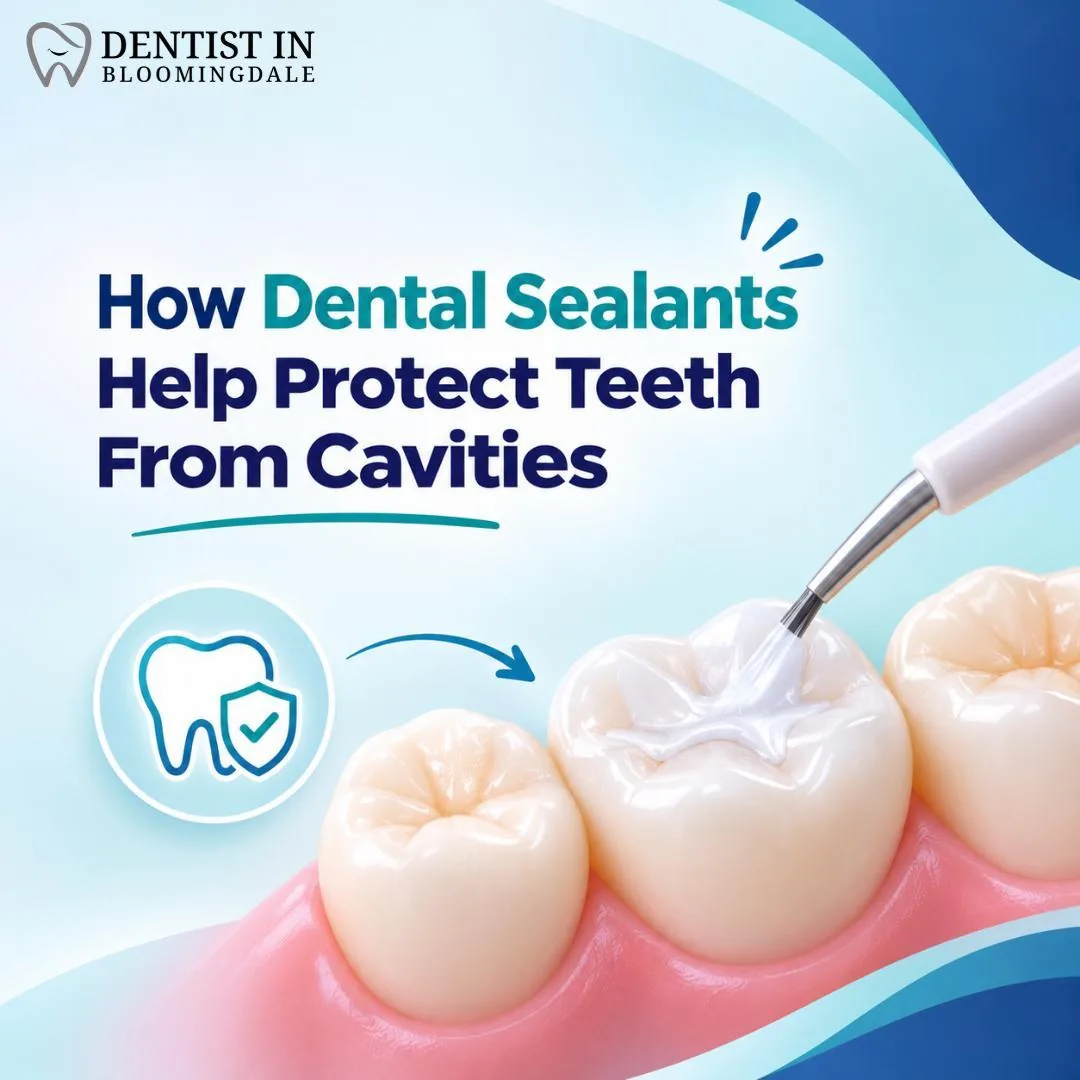
Many people worry about cavities, especially in the back teeth. Molars have deep grooves that trap food and plaque. Brushing can miss those spots. That makes tooth decay more likely. It can feel like a crumb trap.
Dental sealants can prevent up to 80% of cavities when applied to teeth. They fill pits and grooves and form a smooth coating that keeps out bacteria and food debris. Pediatric dentists bond the sealant into the tooth in a quick, painless step.
Dental sealants are thin coatings that pediatric dentists place on chewing surfaces of molars. They fill deep grooves and pits where food, plaque, and bacteria collect. Sealants quickly bond into depressions and grooves and form a protective shield over enamel to help prevent tooth decay.
Studies show sealants can prevent up to 80% of cavities on treated teeth.
Teenagers who have not previously had sealants can still get them and benefit. The coating blocks food particles and oral bacteria, making teeth easier to clean and lowering cavity risk.
The next section explains how sealants block bacteria and plaque on hard to reach chewing surfaces.
Dental sealants act like raincoats for your teeth. They stop trouble before it starts, letting you bite into snacks with fewer worries.
Teeth often have tiny grooves and pits that trap food particles and plaque. Bacteria love to hang out in these spots, leading to cavities over time. That's where dental sealants come into play.
Sealants fill these crevices, blocking bacteria from settling in. A pediatric dentist applies the sealant quickly; it bonds right into the depressions of the tooth.
These protective coatings can prevent up to 80% of cavities when applied properly. By sealing off vulnerable areas, sealants make teeth easier to clean. This helps keep harmful bacteria and those pesky cavities at bay.
Getting sealants is a smart move for anyone who wants stronger oral health and less chance of tooth decay down the road.
Dental sealants play a crucial role in stopping plaque buildup. They fill deep grooves and pits on chewing surfaces where food often hides. These tricky areas are tough to clean, even for the best brushers.
Sealants form a protective barrier that keeps harmful bacteria at bay. By covering these vulnerable spots, they help prevent cavities from developing.
The application of sealants can decrease cavity risk significantly. In fact, studies show that dental sealants can prevent up to 80% of cavities when applied correctly. Pediatric dentists use this method to keep kids' teeth healthy by blocking out food particles and plaque effectively.
Sealants fill in the deep grooves and pits on chewing surfaces. They make teeth much easier to clean. This smooth surface helps prevent plaque buildup where bacteria love to hide. Less plaque means lower chances of tooth decay.
Sealants also block food debris from getting stuck, which can lead to cavities. By forming this protective barrier, they significantly reduce cavity risk and promote better oral hygiene overall.
Dental sealants work wonders in back teeth, offering impressive protection against decay. They help keep cavities at bay for years. Many studies show that these coatings significantly cut down on tooth decay over time. Curious to know how they perform and who can benefit? Explore further into the area of dental sealants!
Sealants cut cavity risk in back teeth by as much as 80%.
| Point | Summary | First-Hand Note |
|---|---|---|
| Protection Rate | They prevent up to 80% of cavities on back teeth. | A pediatric dentist observed this benefit in routine checkups. |
| How They Work | Sealants fill deep grooves and pits where food hides. | An office report showed material bonding into grooves quickly. |
| Barrier Effect | They form a shield over enamel and block bacteria. | A parent watched bacteria get sealed out during a child’s visit. |
| Cleaning Help | They smooth rough areas, so brushing cleans better. | The dentist noted easier plaque removal at follow ups. |
| Who Benefits | Children and teens gain from sealants on new molars. | A teen who missed early care still gained strong protection. |
| Application | Clinicians clean the tooth, place the resin, and cure it fast. | An assistant described the quick bonding during a treatment. |
Long-term cavity prevention matters for oral health.
Children and teens with new molars can gain a lot from dental sealants. Adults with deep grooves in their teeth should consider them too. These coatings provide extra protection against cavities.
Kids and teens often get new molars around ages six to twelve. These teeth come with deep grooves and pits that trap food and plaque. Dental sealants can fit right into these spaces, making it harder for bacteria to cause trouble.
They help prevent up to 80% of cavities when applied early.
For teenagers who haven't had sealants yet, now is a great time. The benefits last long after the application. Sealants act as a protective barrier against those pesky food particles and germs that lead to decay.
Pediatric dentists easily apply them during routine visits, ensuring young smiles stay healthy for years to come.
After discussing children and teens, adults also find themselves at risk. Many have deep grooves or cavity-prone teeth that invite trouble. These individuals often struggle to keep their teeth clean.
Food debris and plaque love to hide in those tricky spots.
Dental sealants can make a big difference for these adults. Sealants fill in the deep pits where bacteria tend to gather. They form a protective barrier on the enamel, blocking out harmful substances that cause tooth decay.
In fact, dental sealants can prevent up to 80% of cavities when correctly applied. By using sealants, adults enhance their oral health and reduce their chances of developing painful cavities down the road.
The dentist starts by cleaning the tooth to remove any food or plaque. They then apply the sealant, which forms a protective layer over the chewing surface. Once it hardens, it creates a strong barrier against bacteria and food debris.
Dental professionals start with cleaning the tooth to ensure it is free from food debris and plaque. A clean surface helps sealants bond effectively for maximum cavity prevention.
Following these steps makes sure that dental sealants work efficiently to protect teeth from cavities and decay while improving overall oral health.
Cleaning the tooth sets the stage for applying and curing the sealant. This process is quick but crucial for effective cavity prevention.
Dental sealants are thin coatings applied to the chewing surfaces of teeth. They act as a shield, protecting against cavities by keeping out food particles and bacteria.
Sealants fill in the grooves and pits on teeth. This creates a smooth surface that is harder for plaque to cling to, reducing the risk of decay.
Children and teenagers benefit most from dental sealants since their molars are more prone to cavities. However, adults with deep grooves can also use them for extra protection.
Yes, dental sealants are safe for both kids and adults. They have been used for years without issues; they help keep your smile healthy while making brushing easier too!
Tell us a little about what you need — we'll be in touch shortly.
366 W Army Trail Rd #310a, Bloomingdale, IL 60108, United States
Hi! I'm Tooth fairy! Your AI Assistant Ask me anything