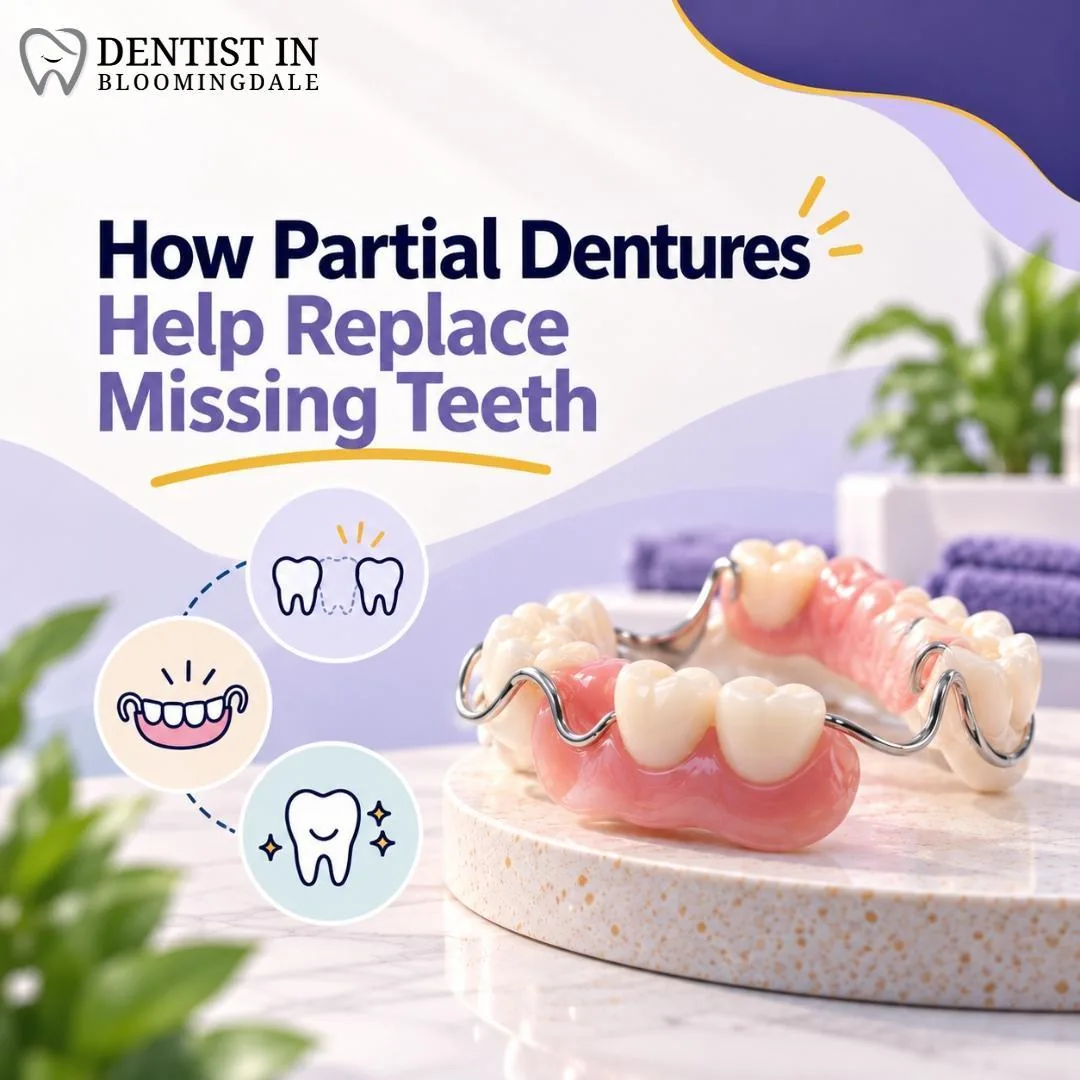
Missing teeth can make eating and talking hard. They can also make a person hide their smile. Many people want a steady fix that protects their other teeth. Partial dentures often fit that need.
Partial dentures replace several missing teeth while keeping the remaining natural teeth in place. This post will explain how they work, the benefits, the common types, and simple care steps.
It will show how partial dentures can restore chewing, speech, and confidence. Keep reading.
Partial dentures replace several missing teeth while leaving remaining natural teeth in place. Full dentures replace an entire arch, while partial dentures replace only some missing teeth.
They are removable dentures that the wearer can take out and put back. A dentist recalls fitting a patient who kept healthy teeth and regained chewing function with this dental prosthetics option.
They stimulate the jaw through bite pressure, which helps maintain bone health. This action helps prevent bone loss where teeth are missing. Patients regain chewing function and clearer speech.
The prosthetics stop nearby teeth from shifting and keep proper spacing. They also offer gum support, aid oral rehabilitation, and boost aesthetic enhancement and oral health. One patient said the denture restored his smile and improved confidence.
Partial dentures fill empty spaces in the mouth and fit snugly with natural teeth. They help people chew and smile with fewer worries.
Custom fitting makes partial dentures effective. They fill in the gaps left by missing teeth while keeping natural teeth intact. Dentists create a mold of a patient’s mouth to ensure that the denture fits just right.
This careful procedure prevents shifts in existing teeth, protecting their positions.
A snug fit allows patients to chew and speak normally again. Partial dentures stimulate the jaw with bite pressure. They help maintain bone health, which can diminish if teeth are missing.
With proper care, these removable appliances last longer and support overall oral health effectively.
Partial dentures securely attach to existing teeth through anchoring clasps. These clasps grip onto the natural teeth, providing stability and preventing the denture from moving around while eating or speaking.
This connection helps maintain proper alignment in the mouth. Without these secure points, partial dentures might shift uncomfortably.
One user shared how their partial dentures changed daily life. They appreciated being able to smile confidently and chew without worry. Anchoring clasps make all this possible by keeping everything in place, allowing individuals to enjoy food and conversation again with ease.
Overall, these simple but effective devices play a significant role in enhancing oral health and comfort while using removable dentures.
Partial dentures offer great perks. They help people chew and speak better. Plus, they keep natural teeth from shifting out of place. A shiny new smile boosts confidence too.
Chewing and speaking become much easier with partial dentures. These dental prosthetics fill gaps left by missing teeth, allowing a person to enjoy their favorite foods again. They restore the bite pressure needed for proper chewing function.
The wearer can indulge in crunchy apples or chewy steaks without anxiety.
Speech also improves significantly. Partial dentures help clarify sounds that might be tricky otherwise. People often find they regain confidence in conversations after using them.
In short, these removable appliances play a vital role in everyday life by enhancing both eating and talking abilities while promoting better oral health overall.
Partial dentures play a vital role in oral health by preventing the shifting of natural teeth. They fill gaps left by missing teeth, keeping remaining teeth stable and properly aligned.
Without partial dentures, nearby teeth might start to drift into empty spaces. This movement can lead to misalignment and bite issues.
Maintaining proper spacing between existing teeth helps preserve overall dental structure. Partial dentures also stimulate the jawbone through bite pressure, which further supports bone health.
By wearing these removable appliances, individuals not just maintain their smile but also improve stability across their entire mouth.
Partial dentures can change a person's smile. They fill in gaps where teeth are missing, giving the face a fuller look. Many people feel more confident about their appearance after getting them.
A bright smile often leads to better interactions with others. Improved speech clarity adds to that boost in self-esteem as well.
For someone who struggled with missing teeth, partial dentures made a significant difference. Instead of covering up smiles due to embarrassment, they showcased their newfound confidence.
This simple dental solution enhances aesthetics and supports overall oral health by maintaining the proper spacing between remaining teeth; it prevents other teeth from shifting out of place too.
Partial dentures come in various types, each offering its own advantages. Metal framework partials provide strength and stability while remaining lightweight. Acrylic partials are lightweight and can blend well with natural gums.
Flexible options offer comfort and adaptability for a better fit. Each type serves to improve oral function and aesthetics, making them vital tools for tooth replacement. Curious about their unique features? Keep reading!
Metal framework partial dentures offer strong support and durability. They use a metal base that holds the replacement teeth in place. This type of denture fits snugly over existing teeth, preventing any shifting or movement.
Users enjoy improved chewing function and speech clarity with this option.
These dentures are removable, allowing users to take them out for cleaning and care easily. The metal framework helps maintain proper spacing between remaining teeth while also stimulating the jawbone.
This stimulation is crucial because it prevents bone loss where teeth are missing. Now, let’s explore acrylic partial dentures next.
Acrylic partial dentures offer a lightweight and comfortable option for those missing several teeth. They sit securely in the mouth thanks to their unique design, which includes gum-colored acrylic bases that blend with natural gums.
These dentures help maintain proper spacing between remaining teeth. This prevents them from drifting into empty spaces.
Acrylic partials are also easy to remove, making cleaning straightforward. Their flexibility allows wearers to enjoy better chewing function and speaking clarity. Since they support the jaw through bite pressure, these dentures can aid in preventing bone loss where teeth are absent.
Next, let's look at flexible partial dentures, another great choice for tooth replacement.
Acrylic partial dentures lead into flexible partial dentures. Flexible options offer comfort and adaptability for users. These dentures are made from a soft, pliable material that adjusts to the shape of one's mouth.
Users appreciate the lightweight feel and natural appearance.
Flexible partials help maintain spacing between existing teeth. They fit securely without metal clasps, enhancing aesthetics while providing support for gums. This type of denture also prevents remaining teeth from shifting out of position.
By stimulating the jaw with bite pressure, they contribute to bone health too, reducing risks of bone loss in areas where teeth are missing.
Taking care of partial dentures is vital. Daily cleaning helps keep them fresh and free from buildup. Regular check-ups with the dentist also help catch any problems before they grow serious.
Cleaning partial dentures is crucial for maintaining oral health. A good cleaning routine prevents odors and bacteria buildup. Follow these steps for effective care:
Regular dental check-ups play a crucial role in maintaining partial dentures. These visits help dentists ensure that the dentures fit correctly and remain comfortable. They can check for any issues before they become serious problems.
For instance, improper fitting can lead to sore gums or shifting of remaining teeth.
During a visit, the dentist may also assess oral health beyond dentures. They will examine the gums and other teeth to prevent complications. Many people with partial dentures notice their speech improves after adjustments from their dentist.
Keeping up with these appointments helps maintain proper spacing between natural teeth and supports overall oral health.
Partial dentures are removable appliances that replace missing teeth. They help restore your smile and improve chewing ability.
Partial dentures fit around your remaining natural teeth. They fill gaps, providing support for your bite and helping you eat comfortably.
Partial dentures offer a cost-effective solution for replacing missing teeth. They can be made quickly and adjusted easily to fit your mouth well.
Some people may find them uncomfortable at first or have difficulty speaking clearly while adjusting to them. Regular check-ups will help keep them fitting properly and feeling good.
Tell us a little about what you need — we'll be in touch shortly.
366 W Army Trail Rd #310a, Bloomingdale, IL 60108, United States
Hi! I'm Tooth fairy! Your AI Assistant Ask me anything