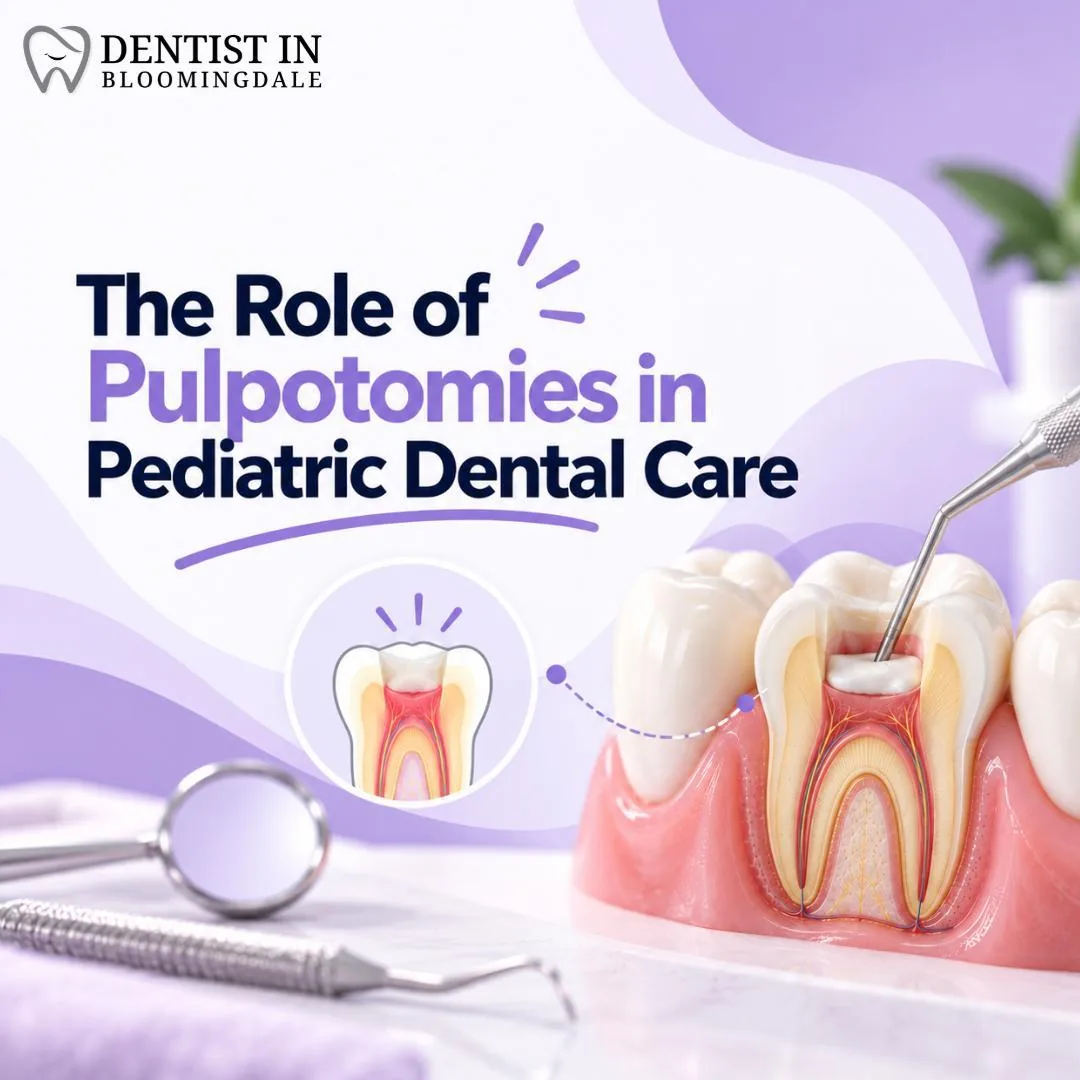
Many parents watch their child wince from tooth pain and feel lost about the next step. Dental visits can feel scary, like a mystery box. No parent likes surprise tooth drama. They want a quick fix that stops pain and saves the baby tooth.
A pulpotomy removes damaged inner tissue from a primary tooth and keeps the roots healthy. It often stops pain fast and helps the tooth stay in place until the adult tooth arrives.
Moving on, a pulpotomy treats infected tissue inside a child's baby tooth. Dentists use pulp therapy in pediatric dentistry to remove the diseased pulp from the crown while keeping the healthy root pulp intact.
This dental procedure supports tooth preservation and helps protect primary teeth until they fall out naturally. Pediatric dentists use materials that seal and restore the tooth, working within child dentistry and endodontics to maintain oral health and allow simple dental restoration.
Pulpotomies help kids keep their natural teeth longer and stay pain-free. This dental treatment stops problems before they grow worse, making life easier for children and parents alike.
Preserving primary teeth plays a vital role in pediatric dentistry. These little teeth are more than just placeholders. They guide the adult teeth into position. Keeping them healthy supports proper oral growth and development.
A pulpotomy can save these valuable teeth from decay or infection. By removing the infected pulp and sealing the tooth, dentists help children avoid pain and future problems. It is like giving a second chance to a tooth that might otherwise face removal.
Pulpotomies play a vital role in preventing further infection in children's teeth. This treatment removes infected pulp tissue from inside the tooth, stopping harmful bacteria in their tracks. If left untreated, infections can spread to other areas of the mouth and even affect overall health.
During a pulpotomy, dentists clean out decayed tissue and seal the area to protect it from future problems. This procedure helps children keep their primary teeth longer while maintaining good oral health.
With healthy teeth, kids can eat properly and smile confidently during this crucial stage of development. Understanding these steps helps parents appreciate why dental procedures like pulpotomies are essential for their child’s well-being. Next up is looking at when a pulpotomy becomes necessary for young patients.
Pulpotomies play a key role in supporting proper oral development for children. They help maintain primary teeth, which guide the permanent teeth into place. Strong and healthy baby teeth promote good alignment and spacing for adult teeth. Without these primary teeth, kids may face issues like crowding or misalignment as they grow.
In addition to preventing problems with tooth alignment, pulpotomies help preserve the child's overall dental health. Healthy primary teeth contribute to better chewing and speaking habits.
Keeping these teeth intact allows children to develop strong oral skills early on; it lays a solid foundation for their future smiles. Next up is understanding when a pulpotomy becomes necessary in pediatric dental care.
A pulpotomy becomes necessary when a child shows signs of severe tooth decay or experiences dental trauma. If the tooth hurts, swells, or looks discolored, it may need special attention.
Parents should consult a pediatric dentist for help in these situations. Don’t wait too long; acting quickly can save the day! Curious about how to spot these warning signs? Read on to learn more!
Severe tooth decay can cause serious problems for children. Parents should watch for clear signs that indicate a pulpotomy may be necessary.
Spotting these signs early helps maintain proper oral health in children's teeth and supports timely treatment options like pulpotomies to preserve those precious primary teeth.
Dental trauma can happen to any child. Kids are active, and accidents occur. Here are some common instances that may require a pulpotomy.
Each situation highlights how quickly dental emergencies can arise in busy lives filled with play and exploration in pediatric dentistry!
During a pulpotomy, dentists take several key steps to treat the child's tooth. First, they numb the area with local anesthesia to keep the child comfortable. Then, they remove the infected part of the pulp from inside the tooth.
After that, they clean and seal it using specific materials designed for kids' teeth. This quick procedure helps save primary teeth from further damage and keeps kids smiling bright! Curious about how this works? Keep reading for more insights on pediatric dental care!
A pulpotomy is a common procedure in pediatric dentistry. It helps treat deep tooth decay and pain in children’s primary teeth.
These steps form a comprehensive approach to maintaining oral health through pulpotomies in child dentistry. Parents often find peace of mind knowing their child's dental problems receive effective attention without losing precious primary teeth.
Pulpotomies bring great advantages for kids by relieving pain and helping to keep their teeth intact. With healthy primary teeth, children can chew better and speak clearly. A strong foundation in oral health leads to fewer issues later on.
Children feel much better after a pulpotomy. This procedure removes the inflamed pulp from a tooth, which can cause serious pain. Once the dentist clears out this infected part, kids experience immediate relief. With less discomfort, they can eat and play without worry.
Pulpotomies also keep children calm during visits to the dentist. The treatment helps avoid more invasive procedures later on. By addressing pain quickly through effective dental care, children maintain good oral health and smile brighter every day.
Pain relief can lead to better outcomes for children's dental health. A successful pulpotomy plays a key role in preserving primary teeth. Primary teeth are essential for proper chewing and speaking. Losing them too early can cause misalignment issues later on.
Maintaining these teeth helps prevent premature tooth loss. Kids need their primary teeth until adulthood, as they hold space for adult ones. Pulpotomies keep these vital teeth healthy and functional.
This procedure significantly supports overall oral health in pediatric dentistry, making it easier for children to enjoy their favorite foods without discomfort or worry.
A pulpotomy is a dental procedure used to treat decay in children's teeth. It involves removing the infected part of the tooth's pulp while keeping the healthy tissue intact.
Pulpotomies help save baby teeth that might otherwise need to be pulled out. Keeping these teeth helps children chew properly and maintain space for adult teeth.
During the procedure, the dentist numbs the area first. Then, they remove the damaged pulp and clean inside the tooth before sealing it with a filling material.
Like any dental work, there can be some discomfort afterward, but serious complications are rare. Dentists monitor healing closely to ensure everything goes smoothly.
Tell us a little about what you need — we'll be in touch shortly.
366 W Army Trail Rd #310a, Bloomingdale, IL 60108, United States

Hi! I'm Tooth fairy! Your AI Assistant Ask me anything