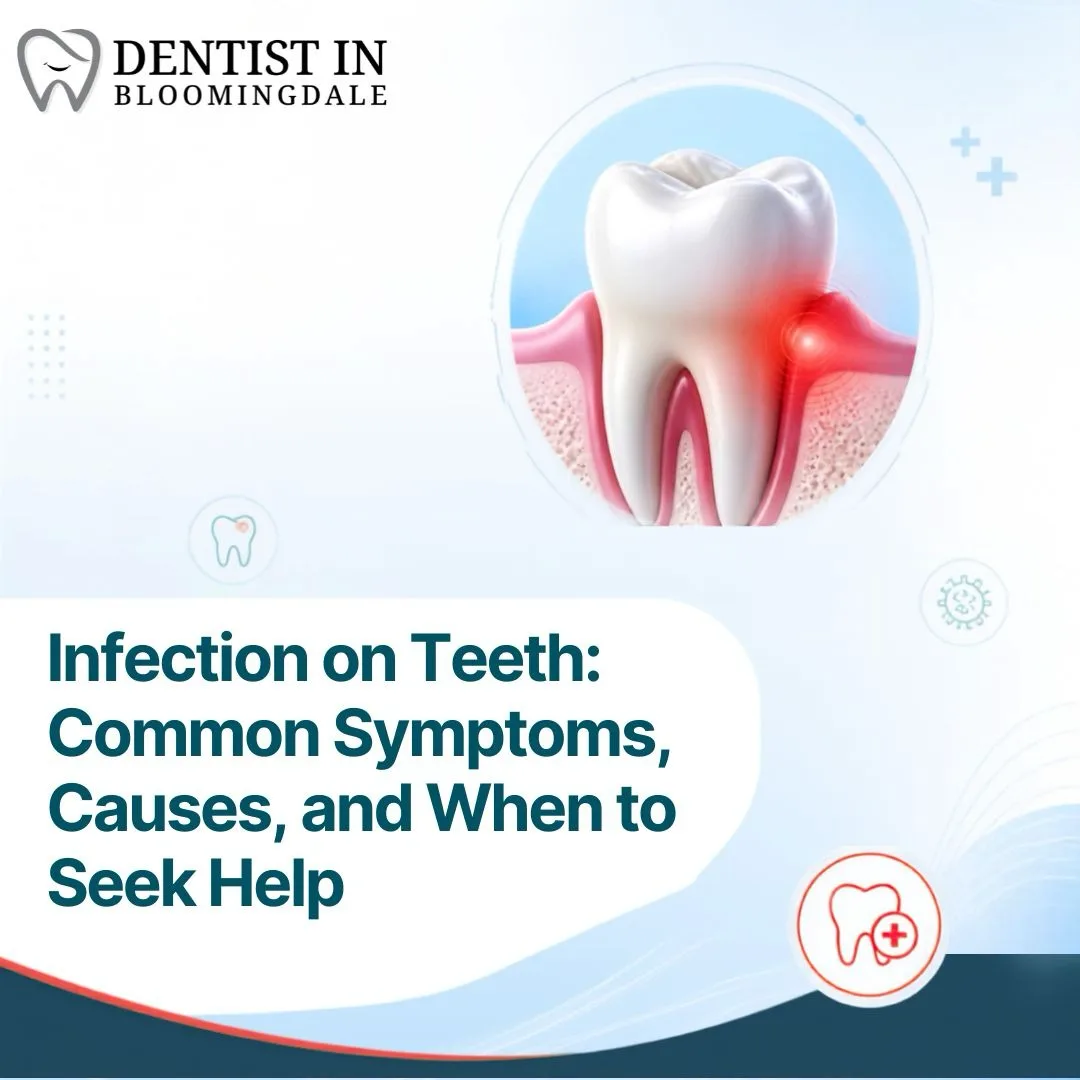
A sudden toothache or new swelling alarms almost everyone. People often search for "infection on teeth" when pain or sensitivity starts at night, and a bad taste or a fever adds to the worry. Toothache, abscess, and bad breath together usually point to a dental infection caused by bacteria.
A tooth abscess is a pocket of pus near a tooth caused by a bacterial infection. Below you will find the common symptoms — pain, sensitivity, swelling, and systemic signs — along with the usual causes: cavities, dental trauma, and gum disease. If you already know you need care, our tooth infection treatment page explains what a visit looks like.
Tooth infections cause a range of symptoms that signal a problem. Pain and swelling often come together, while sensitivity to hot or cold foods may also appear. Common causes include bacterial invasion from untreated cavities and dental trauma, and gum disease can lead to more serious complications if left unchecked.
A tooth infection usually announces itself clearly. Pain is typically the first sign, showing up as a deep, throbbing ache in the tooth or jaw. Sensitivity to hot or cold drinks may also occur — a sip of coffee can trigger sharp discomfort. Swelling around the affected area is common and can make swallowing difficult.
An infected tooth can produce pus that leaks into the mouth, causing a foul taste and bad breath. Dental pain accompanied by a fever points to an infection that is spreading. A fever over 100.4°F alongside dental discomfort needs emergency care to keep the bacteria from travelling further.
Recognizing these symptoms early is what makes prompt treatment of abscesses and infections possible.
Bacterial invasion frequently leads to tooth decay, which happens when harmful bacteria penetrate the tooth's protective outer layer. Untreated cavities worsen over time and open a pathway deeper into the tooth.
Dental trauma — a crack or a fracture — also lets bacteria inside. Gum disease contributes significantly as well; swollen gums trap food particles and plaque, so treating gingivitis early matters.
Once infection sets in, an abscess can form: a pocket of pus created by bacterial growth. The pain becomes intense and persistent, which is usually what finally prompts a call to the dentist. Sensitivity to hot or cold should not be ignored either — it hints at the same underlying problems.
When you notice severe pain, fever, or swelling in your mouth, seek dental care immediately. A quick evaluation prevents complications and gets the right treatment started.
A tooth abscess can signal the need for urgent care. Dental pain combined with a fever over 100.4°F indicates an infection that requires immediate attention. Pain that starts as a deep, throbbing sensation in the tooth or jaw is often the earliest warning. Difficulty swallowing suggests the infection has begun to spread.
Infected teeth can produce pus that leaks into the mouth, leading to a foul taste and bad breath. A persistent toothache is a clear signal to seek a professional evaluation quickly — see our guide on finding an emergency dentist near you.
A deep, throbbing pain in the tooth or jaw usually means something needs attention now. Sensitivity to hot or cold temperatures signals the same. Dental pain paired with fever suggests an active infection and needs urgent care.
A persistent toothache should never be ignored, because it often warns that an abscess is forming. If pus leaks into the mouth it produces a foul taste and contributes to bad breath. Difficulty swallowing makes professional help even more urgent. Timely intervention prevents complications and supports effective treatment — often with root canal treatment that saves the tooth.
Regular check-ups catch problems early. These visits let your dentist identify untreated cavities or gum disease before they escalate into infections — the core of routine exams and cleanings.
Good oral hygiene is essential to prevention. Brushing at least twice a day and flossing daily remove the plaque buildup that harbors harmful bacteria.
Stay alert for signs of infection after treatment as well. Persistent swelling or pain warrants prompt attention from a dentist, and a dental abscess requires immediate care because pus build-up worsens without intervention. Keeping scheduled follow-up appointments gives you the best chance of avoiding serious complications such as fever or difficulty swallowing, which can indicate severe bacterial activity.
Common signs include toothache, swelling, and pain. You may feel sensitivity to hot or cold, and you might run a fever. An abscess can form. These are the classic dental signs of infection.
Most infections start when bacteria reach the inside of the tooth. Decay, cracks, or gum disease let bacteria in, and untreated damage can lead to an abscess.
A dental exam and imaging guide the diagnosis. The dentist checks for toothache, swelling, and sensitivity, and looks for an abscess and other signs of infection.
See a dentist if you have a strong toothache, a fever, or growing swelling. Seek care fast if you notice an abscess or deep pain, and do not wait when symptoms get worse.
Dentists combine antibiotics with dental repair. They may drain an abscess, clean out the tooth, or perform focused restorative work. Treatment cuts the pain and brings the bacteria under control.
If you have a throbbing tooth, swelling, or a bad taste that will not go away, contact Dentist in Bloomingdale today. Same-day evaluation for infections and abscesses keeps a painful problem from becoming a serious one — book an appointment or call our office.
Common signs include toothache, swelling, and pain. You may feel sensitivity to hot or cold, and you might run a fever. An abscess can form. These are the classic dental signs of infection.
Most infections start when bacteria reach the inside of the tooth. Decay, cracks, or gum disease let bacteria in, and untreated damage can lead to an abscess.
A dental exam and imaging guide the diagnosis. The dentist checks for toothache, swelling, and sensitivity, and looks for an abscess and other signs of infection.
See a dentist if you have a strong toothache, a fever, or growing swelling. Seek care fast if you notice an abscess or deep pain, and do not wait when symptoms get worse.
Dentists combine antibiotics with dental repair. They may drain an abscess, clean out the tooth, or perform focused restorative work. Treatment cuts the pain and brings the bacteria under control.
Tell us a little about what you need — we'll be in touch shortly.
366 W Army Trail Rd #310a, Bloomingdale, IL 60108, United States

Hi! I'm Tooth fairy! Your AI Assistant Ask me anything